
History of Kenner Toys
Kenner Products occupies a special place in toy history, not just as a successful manufacturer, but as a company that fundamentally reshaped the action figure market during its peak years from the late 1970s through the mid-1990s. While Kenner produced a wide range of toys after its founding in 1947 in Cincinnati, Ohio, it was during this “golden era” that the company defined modern action figure collecting, licensing strategies, and play patterns that still influence the industry today.
Early Years and Foundations
Kenner was founded by brothers Albert, Philip, and Joseph Steiner, initially focusing on simple, inventive toys and games. Through the 1950s and 1960s, the company built a reputation for clever, often educational products, including items like the Easy-Bake Oven. However, action figures were not yet central to its identity. That began to change in the 1970s, as the toy industry evolved alongside television and film licensing opportunities.
A major turning point came when Kenner was acquired by General Mills in 1967, placing it within a larger corporate structure that also included Parker Brothers. This gave Kenner access to greater distribution, marketing resources, and, crucially, licensing opportunities that would define its future.
The Star Wars Revolution (Late 1970s–Early 1980s)
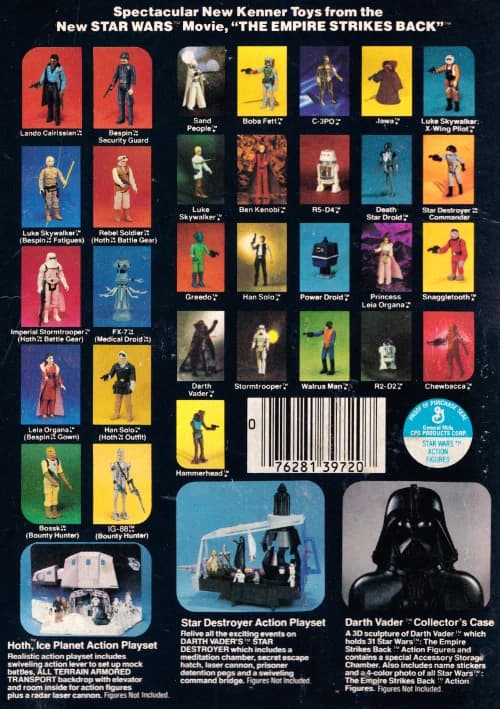
The most important moment in Kenner’s history came in 1977, when it secured the master toy license for Star Wars, directed by George Lucas. At the time, expectations for the film were modest, and larger toy companies passed on the license. Kenner, however, took the risk—and changed the toy industry forever.
When Star Wars became a cultural phenomenon, Kenner was initially unprepared to meet demand. Famously, it sold an “Early Bird Certificate Package” during the 1977 holiday season, allowing children to mail away for figures that had not yet been manufactured. When the first figures arrived in 1978, they introduced a now-standard 3.75-inch scale, smaller and more affordable than competitors like Hasbro’s 12-inch G.I. Joe figures.
This scale was revolutionary. It allowed for a wide range of characters, vehicles, and playsets to coexist affordably. Between 1978 and 1985, Kenner released over 90 figures across the original trilogy—Star Wars, The Empire Strikes Back, and Return of the Jedi—alongside iconic vehicles like the Millennium Falcon and AT-AT.
Kenner’s Star Wars line established several enduring principles:
- Character-driven collecting
- Cross-compatible scales
- World-building through vehicles and environments
- Long-term engagement via waves and expansions
Even after the line wound down in the mid-1980s, its influence persisted—and it would later be revived.
Expanding the Action Figure Portfolio (1980s)
Following the success of Star Wars, Kenner aggressively pursued other licenses and original concepts. Not all matched the same success, but several became important in their own right.
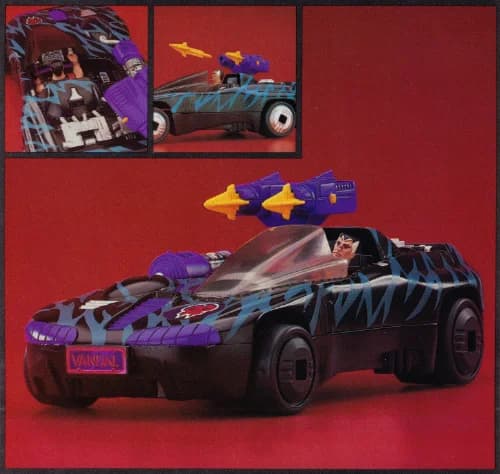
One notable line was The Six Million Dollar Man, which predated Star Wars but helped establish Kenner’s credibility in action figures. Later, Kenner experimented with more stylized and action-focused concepts, including M.A.S.K. (Mobile Armored Strike Kommand), which combined vehicles with transforming features and small figures.
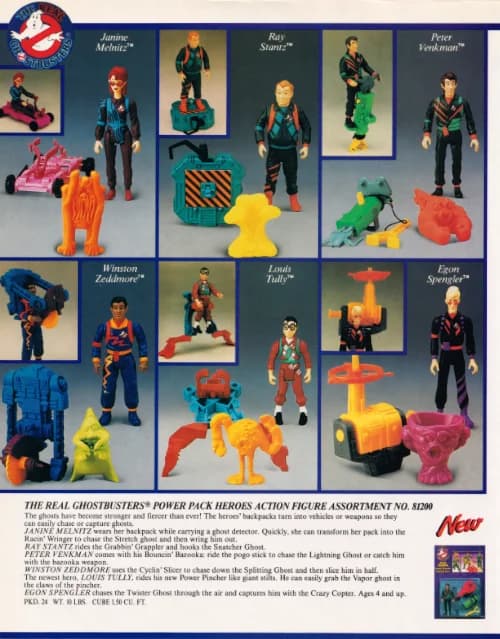
Kenner also capitalized on film licenses throughout the 1980s. Lines based on Indiana Jones and Ghostbusters brought cinematic play into children’s hands. The Real Ghostbusters toyline in particular became a major success, blending animated designs with inventive play features like “fright” mechanisms and ghost-catching gear.
Another key release was the Super Powers Collection, based on DC Comics characters. This line, running from 1984 to 1986, featured figures like Batman, Superman, and Darkseid, each with unique action features activated by squeezing limbs. It was one of the earliest cohesive superhero toy lines and laid groundwork for future comic-based figure systems.
The Golden Era Peak (Late 80s–Mid 90s)
By the late 1980s and early 1990s, Kenner entered what many collectors consider its second golden phase, marked by bold sculpting, muscular aesthetics, and increasingly experimental play features.
A major milestone was the relaunch of Batman figures tied to the 1989 film Batman. Kenner’s Batman line embraced stylization over realism, introducing exaggerated sculpts, neon colors, and action gimmicks. This approach proved hugely successful and influenced the entire industry’s direction during the 1990s.
Kenner followed this with Batman: The Animated Series figures in the early 1990s, which featured more streamlined, animation-accurate designs while retaining playability. These lines demonstrated Kenner’s ability to adapt to different visual styles while maintaining a consistent scale and play philosophy.
Simultaneously, Kenner revived its most important license with Star Wars: The Power of the Force in 1995. These figures reflected 1990s design trends—heavily muscular bodies, dynamic poses, and detailed accessories. While initially controversial among collectors for their exaggerated proportions, they successfully reintroduced Star Wars toys to a new generation and laid the groundwork for the franchise’s modern collecting culture.
Kenner also found success with lines tied to Jurassic Park. Unlike traditional figure lines, these emphasized dinosaurs alongside human characters, integrating action features like “Dino Damage” wounds and capture gear. The combination of figures, creatures, and vehicles echoed the Star Wars formula while adapting it to a new kind of cinematic universe.
Design Philosophy and Innovation
Across its golden years, Kenner distinguished itself through a few consistent innovations:
- Scale Standardization: The 3.75-inch and other formats allowed for expansive ecosystems of toys.
- Play Features: Action gimmicks—spring-loaded punches, color-change effects, and mechanical transformations—were central to engagement.
- World-Building: Vehicles and playsets were not secondary; they were essential parts of the narrative experience.
- Licensing Mastery: Kenner excelled at translating films and TV shows into toy form, often extending their lifespan beyond the screen.
Unlike some competitors, Kenner balanced collectibility with playability. Its figures were durable, affordable, and designed for active use, even as they became objects of collection.
Acquisition and Transition
In 1987, Kenner was acquired by Tonka, which was itself acquired by Hasbro in 1991. Under Hasbro, the Kenner brand continued to operate for several years, particularly on action figure lines like Star Wars and Batman.
By the mid-to-late 1990s, however, the Kenner name began to be phased out, with Hasbro consolidating its brands. Although the Kenner label disappeared, its design teams, philosophies, and product lines were absorbed into Hasbro’s broader operations.
Legacy
Kenner’s impact on the action figure industry is difficult to overstate. It effectively created the modern action figure ecosystem, where characters, vehicles, and environments are interdependent. Its Star Wars line alone established collecting as a mainstream hobby, while its 1990s output helped define the bold, stylized aesthetic of that decade.
Today, vintage Kenner figures are highly sought after by collectors, and their influence can be seen in modern toy lines that continue to use similar scales, articulation systems, and release strategies. More importantly, Kenner demonstrated that toys could extend storytelling beyond the screen, allowing children—and later adult collectors—to build entire worlds in miniature.
From a modest Cincinnati company to a driving force behind some of the most iconic action figures ever made, Kenner’s golden years remain a benchmark for creativity, innovation, and cultural impact in the toy industry.